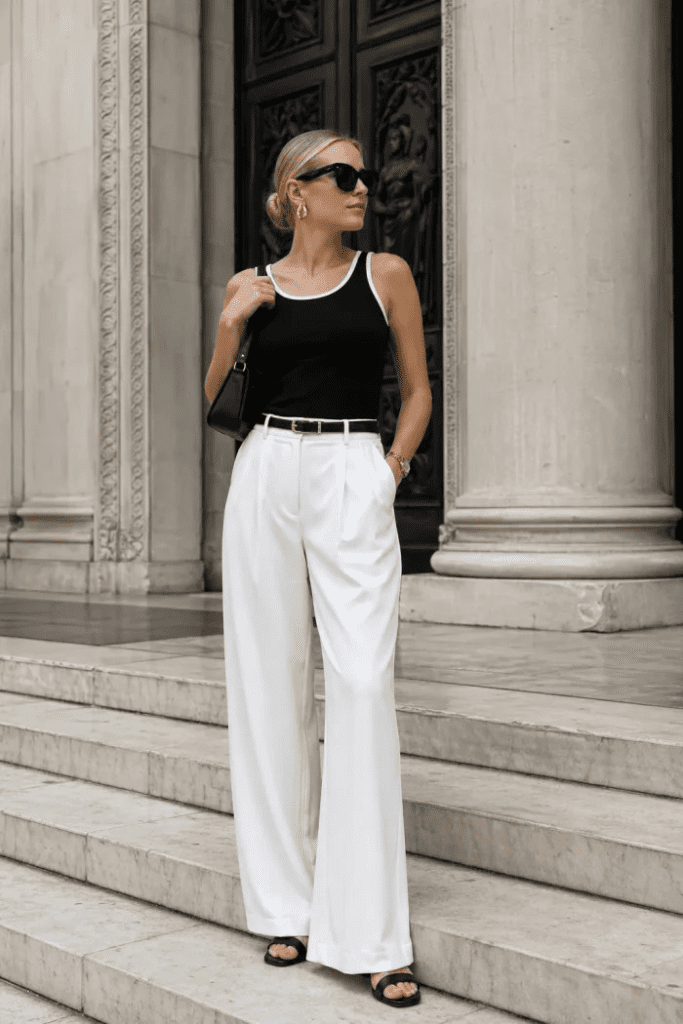
In summer, the old money wardrobe adapts naturally to the season without losing any of its characteristic polish. Linen trousers replace wool. Silk blouses replace cashmere. Tailored shorts step in where structured skirts might otherwise go. The result is a warm-weather wardrobe that feels effortless precisely because every piece has been chosen with intention.
The Visual Language of Old Money Summer Dressing
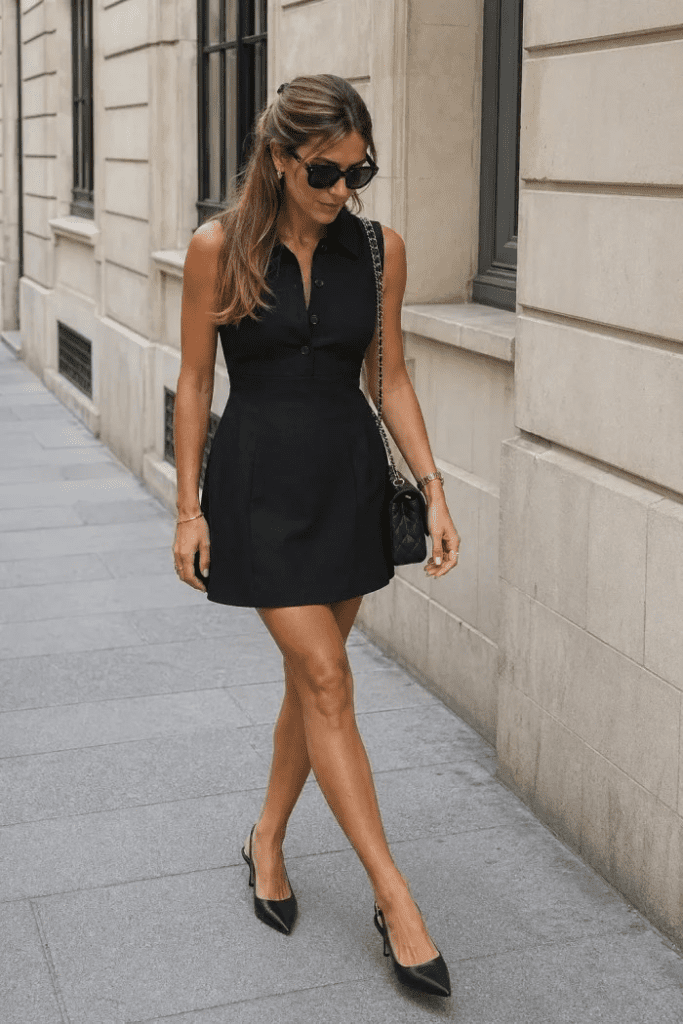
Before building the wardrobe, it helps to understand the principles that govern it. Old money summer style is not a mood board — it is a set of consistent, repeatable decisions that add up to a coherent visual identity.
Fit is the first principle. Old money dressing is neither oversized nor body-conscious. It occupies the considered middle ground: clothes that fit the body with intention. A trouser should drape. A blouse should skim without clinging. A blazer should sit at the shoulder without pulling. When fit is right, even the simplest piece reads as expensive. When fit is off, even the most luxurious fabric cannot save the look.
Fabric matters more than branding. Linen, cotton poplin, silk, fine knit jersey, and lightweight wool are the building blocks of this aesthetic. Visible logos are almost entirely absent. The quality communicates itself through texture, movement, and how the garment holds its shape across a long afternoon. This is perhaps the most important distinction between old money style and its imitators: the investment is in the material, not the label.
The color palette is deliberately restrained. Ivory, cream, white, navy, camel, soft sage, pale blue, warm tan, olive, and charcoal form the core of old money summer dressing. These tones are not chosen arbitrarily — they layer and combine beautifully, which is why old money outfits always look cohesive rather than assembled. A cream knit against white trousers, a pale blue blazer over navy shorts, a camel belt anchoring an all-ivory suit — these combinations work because the palette was built to work together.
Accessories are purposeful, not decorative. A single fine gold chain. A slim leather belt. A structured tote. A silk scarf tied at the neck or looped through a bag handle. Each accessory serves the whole look rather than competing with it. Nothing is added for the sake of adding. This restraint is, paradoxically, what gives old money dressing its richest visual effect — every element earns its place.
The Foundation Pieces
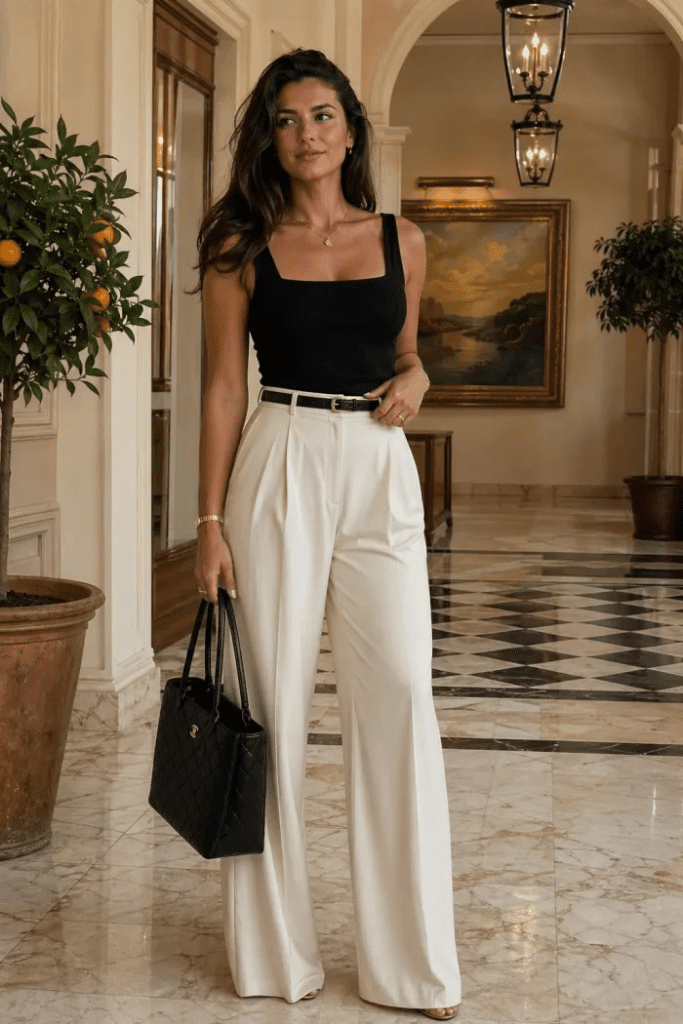
Certain pieces appear again and again in old money summer dressing because they are genuinely versatile and genuinely timeless. These are the wardrobe anchors worth building around.
White pleated wide-leg trousers are perhaps the single most useful piece in this wardrobe. In a lightweight cotton or linen blend, they pair with almost every top — a fitted black tank, a cream silk blouse, a striped poplin shirt, a sleeveless knit. The pleats add structure and visual interest while keeping the silhouette relaxed and summer-appropriate. The white or ivory tone grounds the whole aesthetic.
The striped cotton poplin shirt is another cornerstone. In blue and white, it carries a nautical ease that belongs entirely to summer. It can be tucked into a cream mini skirt for a fresh daytime look, paired with tailored navy shorts for something more grounded and practical, or worn loosely over a simple knit for travel. The stripe brings visual interest while keeping the palette classic — which is exactly what old money dressing asks of any statement element.
Tailored shorts — in navy, camel, cream, or black — are the summer alternative to the trouser. The key is in the construction: a structured waistband, a clean finish, and a length that hits at or just above the knee. Well-made tailored shorts do not read as casual. Paired with a silk blouse, a fitted blazer, or even a longline vest, they sit comfortably in the same register as tailored trousers.
The sleeveless knit tank in cream or ivory is one of the most versatile tops in this wardrobe. It layers beautifully under a linen blazer, pairs effortlessly with white pleated trousers for a tonal look, and works equally well with denim when a silk blouse feels like too much. Its texture adds visual depth to simple combinations, and its breathability makes it genuinely comfortable in warm weather.
The tailored vest — in ivory, black, or a neutral suiting fabric — is the layering piece that elevates everything it touches. Worn over wide-leg trousers as part of a matching set, it creates one of the most striking expressions of summer old money style. Worn as a top with tailored shorts or a mini skirt, it brings structure and polish without the warmth of a blazer.
The Power of Tone-on-Tone Dressing
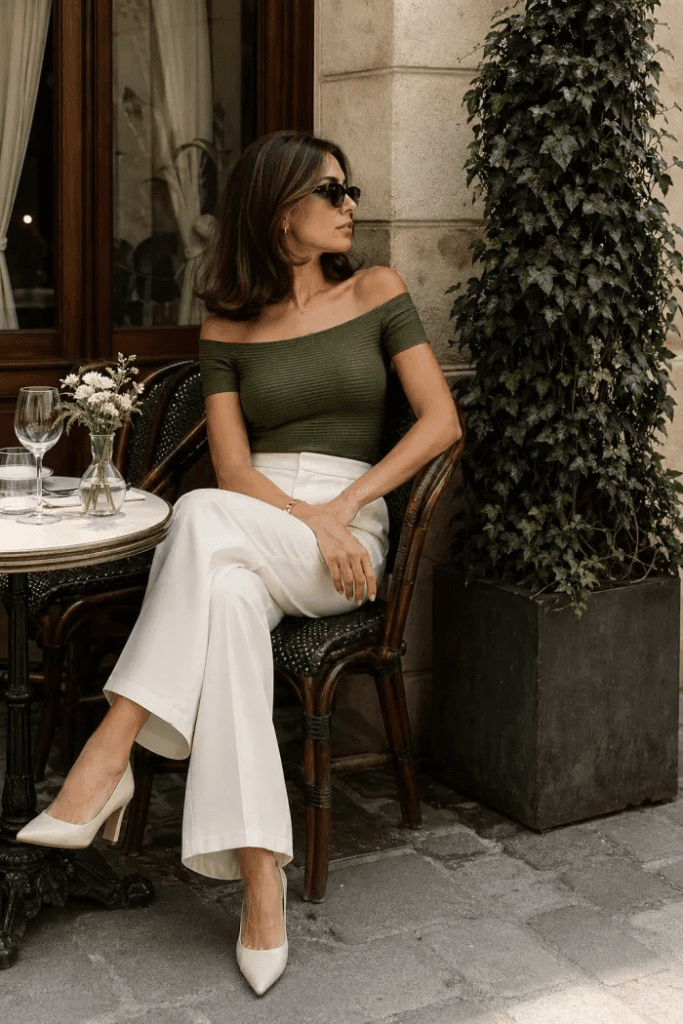
One of the most effective tools in old money summer styling is tone-on-tone dressing — building an outfit from shades that are close to each other rather than sharply contrasting. Cream on white. Charcoal on gray. Camel on ivory. The effect is one of quiet deliberateness: the outfit looks considered and elegant without requiring any complicated styling decisions.
The key to making tone-on-tone work is texture contrast. A cream knit tank against the smooth drape of white wide-leg trousers works because the fabrics are different even though the colors are close. That textural variation creates visual depth, stopping the look from appearing flat or unfinished. A single grounding element — a cognac leather belt, a tan woven bag, warm brown sandals — can anchor a very pale palette and stop it from washing out entirely.
Tone-on-tone is also particularly forgiving. Because the palette is cohesive by design, it is almost impossible to make a wrong pairing within it. The hard work of color matching is already done. All that remains is choosing pieces that fit well and feel right together.
Occasion Versatility: From Daytime to Evening
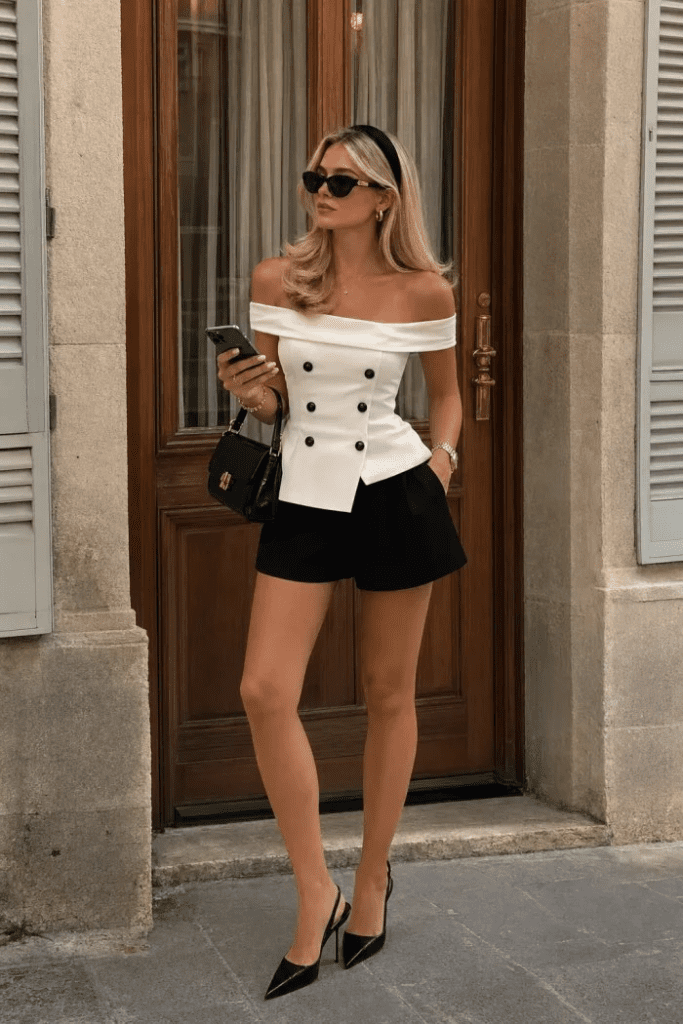
One of the defining strengths of old money summer style is how naturally it adapts across occasions without requiring a complete outfit change.
A striped poplin shirt with cream mini skirt and ballet flats works for a morning market, a gallery visit, and a relaxed lunch without alteration. An ivory vest and wide-leg trouser set can move from a smart-casual city afternoon into a terrace dinner with the swap of flat sandals for kitten-heel mules. A navy long blazer with matching wide-leg trousers and a white cropped tank functions equally well in an airport lounge and at a summer business meeting.
This adaptability is not accidental — it is built into the palette and the silhouette choices. When colors are restrained and shapes are considered, the same pieces can do more work across more contexts. The result is a wardrobe that feels appropriately dressed for almost any situation, rarely overdressed and never underdressed.
Accessories: The Quiet Details That Matter Most
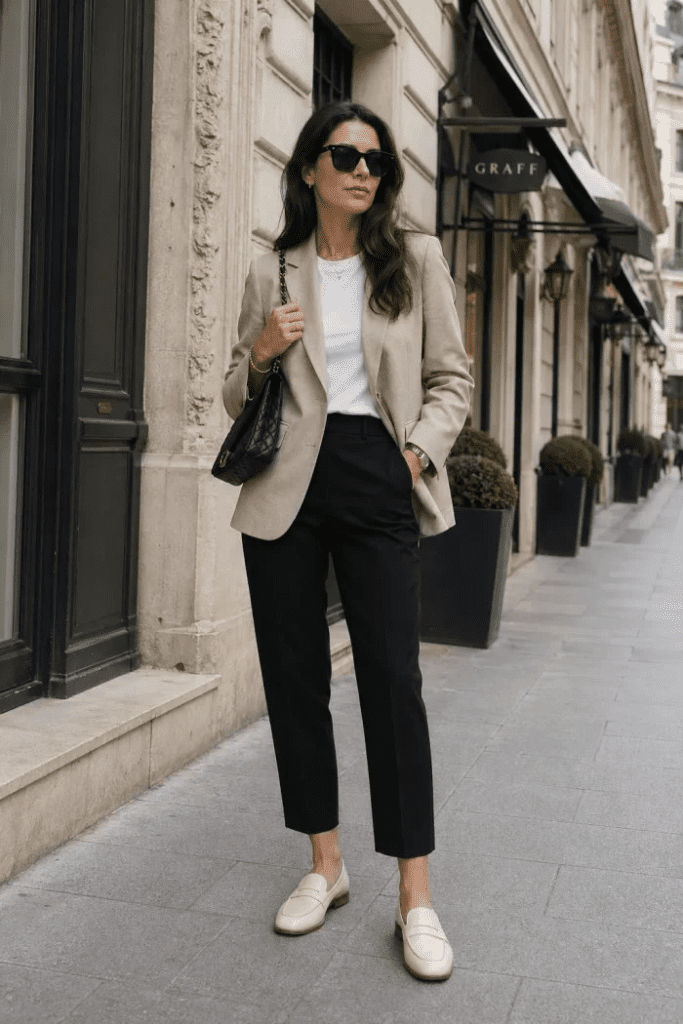
Old money dressing pays close attention to accessories — not because there are many of them, but because each one counts. A silk scarf tied loosely at the neck transforms a white tee and tailored shorts into a complete, memorable outfit. A slim leather belt in cognac or black defines the waist and adds a deliberate finish to trousers or tailored sets. A structured tote in neutral leather, a quilted shoulder bag in ivory or black, a clean watch — these details communicate care and attention without requiring any visible effort.
Jewelry follows the same principle: fine gold chains, simple stud earrings, a delicate bracelet. Nothing competes. Nothing distracts. Everything serves.
Sunglasses deserve particular attention in summer. Tortoiseshell frames, thin gold metal frames, and understated oversized shapes all belong to this aesthetic. Avoid anything too fashion-forward or heavily branded. The right sunglasses finish a look; the wrong ones undermine it.
Building the Wardrobe Over Time
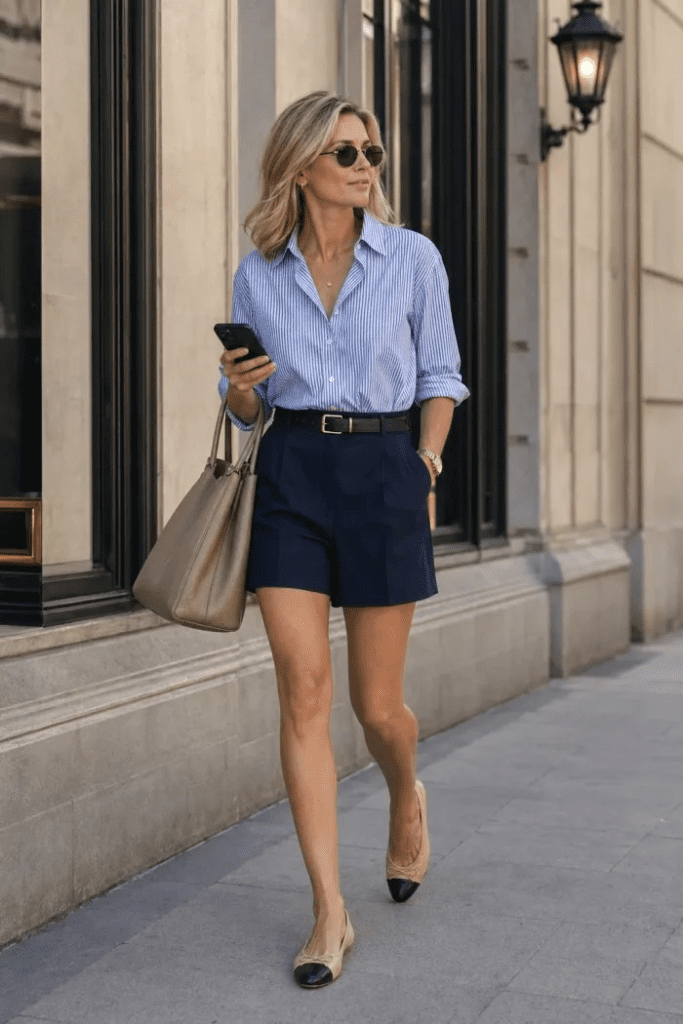
The old money summer wardrobe does not need to be built all at once. It is built through careful, patient acquisition — choosing pieces for their versatility and their quality rather than their novelty.
Start with the anchors: white pleated trousers, a striped poplin shirt, a sleeveless cream knit, a tailored vest. Add a linen blazer in camel or pale blue. Build a shoe wardrobe around loafers, leather ballet flats, and simple leather sandals. Invest in one good structured bag in a neutral that works with everything.
From there, add color carefully — a pale blue blazer, an olive knit, a satin midi skirt in champagne. Let the palette grow slowly, always checking that new pieces work with what already exists.
The goal is a wardrobe in which almost everything goes together, in which getting dressed feels easy, and in which the result always looks quietly, effortlessly right. That is old money summer dressing at its best — not a fashion statement, but a way of living with clothes that have been chosen well and worn with confidence.